




Malaysia’s plastics manufacturing industry is facing a significant competitive challenge. While the country has developed a substantial polymer resin production base and an established downstream plastics manufacturing sector, the rapid growth of imported finished plastic products raises important questions about the industry's future competitiveness.
Trade data reveal a concerning shift. Between 2014 and 2025, Malaysia’s imports of finished plastic products increased by approximately 86%, while exports grew by only 11.5%. In 2025, the value of finished plastic products imported into Malaysia exceeded exports for the first time in the 12-year series examined.
This trend warrants attention not only because of its implications for plastics manufacturers, but also because plastics are essential inputs for Malaysia’s electrical and electronics, automotive, medical, construction, food packaging and other manufacturing industries.
1. Rising Imports: A Warning Sign for Downstream Manufacturing
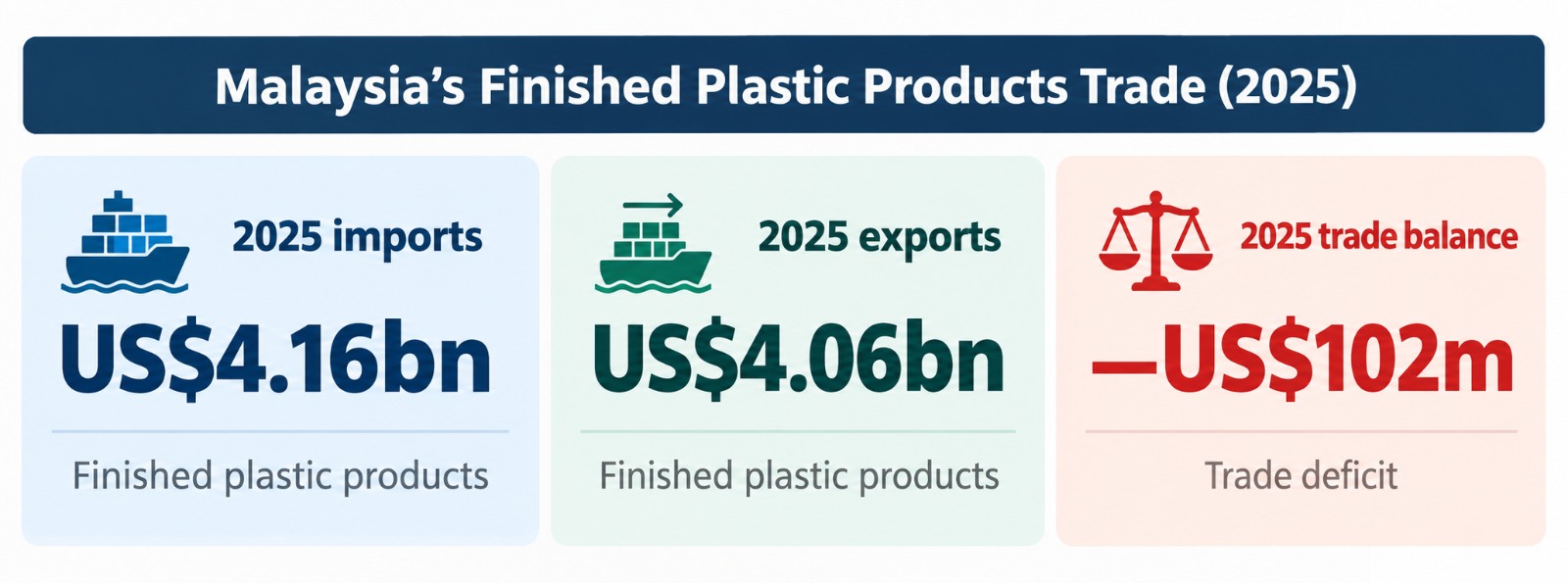
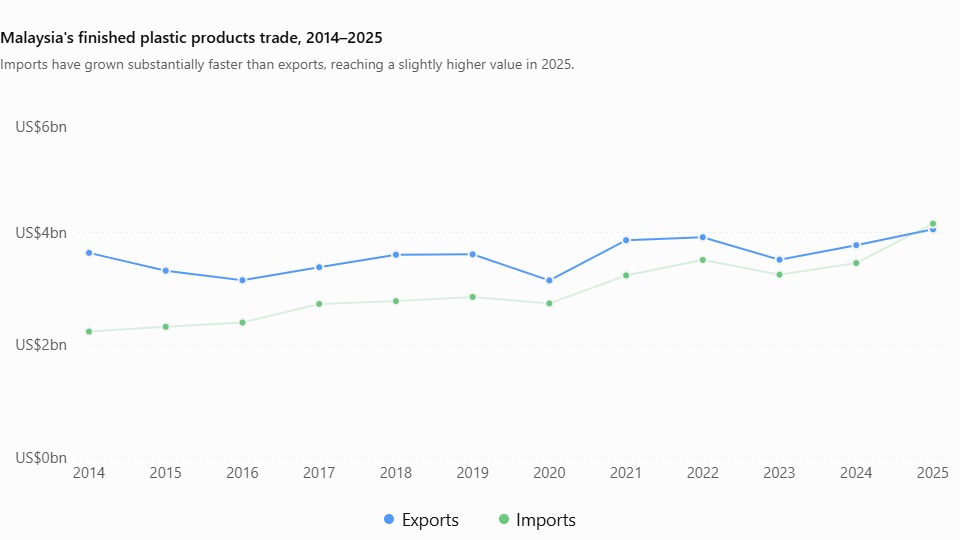
Figure 1. Malaysia's finished plastic products trade, 2014–2025. Source: DOSM data compiled by SSESSMENTS, 1 October 2026. Values rounded to US$ billion.
In 2014, Malaysia recorded a trade surplus of approximately US$1.40 billion in finished plastic products. By 2025, this had shifted to a deficit of approximately US$102 million.
Although a trade deficit does not, by itself, establish that domestic manufacturing is declining, the widening gap between import and export growth signals increasing competitive pressure on local manufacturers.
The challenge extends beyond the loss of individual sales. If local manufacturers are unable to compete on cost, quality and delivery, investment in new machinery, automation, skills development and product innovation may become more difficult to justify.
2. The Raw Material Cost Challenge
Polymer resins are a major production input for plastics converters. Even relatively small differences in resin costs can affect competitiveness, particularly in high-volume manufacturing where margins are tight and customers are highly price-sensitive.
Malaysia has an established domestic resin production industry. In 2025, polymer resin exports totalled approximately US$4.86 billion, compared with imports of US$4.42 billion, resulting in a resin trade surplus of around US$441 million.
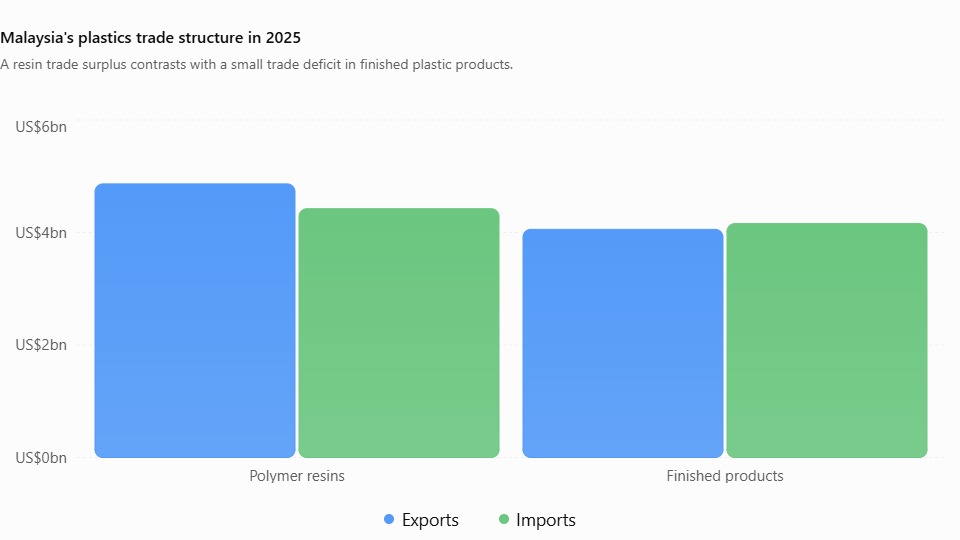
Figure 2. Malaysia's resin and finished plastic products trade in 2025. Source: DOSM data compiled by SSESSMENTS.
A competitive plastics industry requires both a strong upstream resin sector and a viable downstream manufacturing sector. These industries are interdependent: resin producers benefit from a healthy domestic customer base, while plastics converters require reliable supplies of competitively priced raw materials.
SSESSMENTS price assessments indicate that Malaysia has faced higher polyethylene import landed prices than Vietnam in recent years. In 2025, the assessed average was approximately US$1,175 per tonne for Malaysia, compared with US$1,050 per tonne for Vietnam—a difference of around US$125 per tonne.
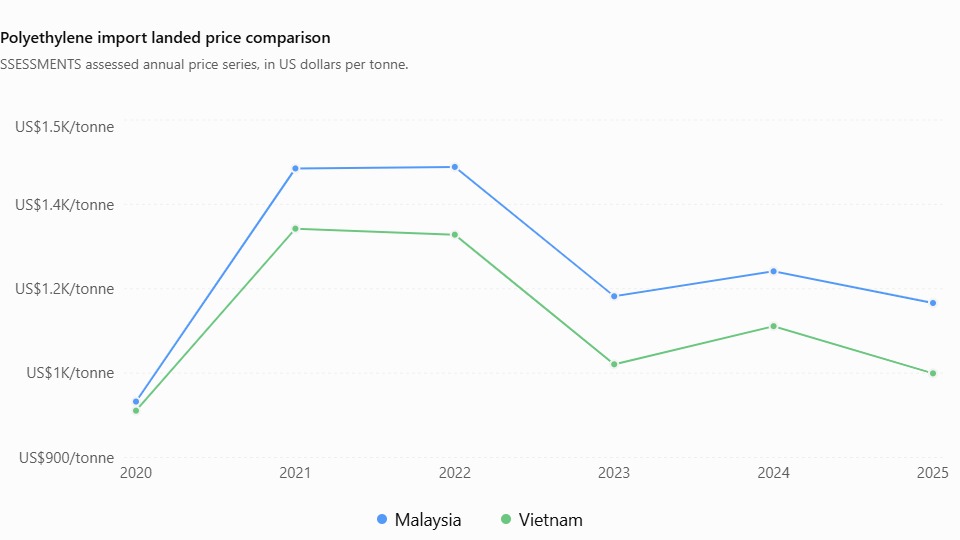
Figure 3. Malaysia and Vietnam polyethylene import landed price assessments, 2020–2025. Source: SSESSMENTS, 1 October 2026. Price assessments are market indicators, not transaction prices for every resin grade or purchaser.
This cost difference matters because manufacturers compete in regional and international markets where customers compare the price of finished products, not the cost structure of the producing country.
Improving access to competitively priced raw materials is therefore an important part of strengthening Malaysia’s downstream manufacturing competitiveness. Any review of raw material import policies should take into account the needs of both domestic resin producers and plastics converters, including differences across resin grades and applications.
3. Vietnam’s Rise Highlights Intensifying Regional Competition
Vietnam provides an important benchmark for Malaysia because both countries are competing to attract manufacturing investment, develop export-oriented industries and strengthen their positions in regional supply chains.
Between 2014 and 2023, Vietnam’s exports of finished plastic products increased from approximately US$2.14 billion to US$5.25 billion - an increase of 146%. Over the same period, Malaysia’s exports declined slightly, from US$3.64 billion to US$3.52 billion.
Figure 4. Finished plastic products exports, Malaysia and Vietnam, 2014–2023. Source: Country-reported trade data compiled by SSESSMENTS. The comparison ends in 2023, the latest common year in the supplied regional series.
Vietnam's performance illustrates the scale of competition facing Malaysian plastics manufacturers. Competitive raw material access may be one contributing factor, alongside investment, industrial infrastructure, labour productivity, export market access and supply-chain development.
China adds another dimension to this competitive environment. Its manufacturing scale, integrated supply chains and production capabilities place further pressure on regional plastics converters, particularly in standardised and price-sensitive products.
For Malaysia, competing solely on price against much larger manufacturing economies may not be sustainable. The country must also strengthen its advantages in technical capabilities, specialised products, quality assurance, delivery reliability and responsiveness to customers.
4. Strengthening Malaysia’s Plastics Manufacturing Ecosystem
Malaysia's plastics industry remains an important contributor to the country's manufacturing ecosystem. The priority should be to ensure that domestic companies can continue to invest, innovate and participate in higher-value supply chains.
MPMA believes that a balanced approach to industrial competitiveness should focus on four areas:
- Competitive raw material access. Review the impact of resin import duties and other cost factors on downstream manufacturers, while recognising the importance of a sustainable domestic resin production industry.
- Manufacturing productivity and technology. Accelerate automation, process improvement, energy efficiency and digitalisation, particularly among small and medium-sized plastics manufacturers.
- Higher-value production and skills. Strengthen technical training and capabilities in precision moulding, advanced materials, product development and quality management to support specialised manufacturing.
- Trade and investment competitiveness. Monitor finished product imports, identify sectors facing significant import competition and strengthen support for export development and manufacturing investment.
Importantly, a review of raw material policies should be evidence-based. Resin grade, tariff classification, applicable trade agreements, domestic supply availability and actual landed costs must all be considered before determining appropriate policy measures.
5. The Way Forward
Malaysia has built valuable capabilities across the plastics value chain. Preserving and expanding those capabilities will require policies that support the competitiveness of the entire industry—not one segment at the expense of another.
The growing imports of finished plastic products, the contrasting performance of Malaysia and Vietnam, and the differences in regional resin prices highlight the need for closer attention to downstream manufacturing competitiveness.
The objective is not simply to reduce imports, but to ensure that Malaysian manufacturers have the conditions necessary to compete, grow and export.
A stronger downstream plastics sector will support domestic resin demand, sustain skilled manufacturing employment, encourage reinvestment and reinforce Malaysia's position in regional and global supply chains.
As Malaysia advances its industrial development ambitions, maintaining a competitive and resilient plastics manufacturing industry must remain an important priority.